The Odyssey Trailer’s Accents Aren’t Actually that Weird
The ubiquity of the British accent in films about the distant past is a more modern convention than many people realise
Defy the Gods. Watch the New Trailer for Christopher Nolan's The Odyssey and experience the film in theaters 7 17 26. pic.twitter.com/Ve6wUGxw3P
— The Odyssey Movie (@odysseymovie) May 5, 2026
“You’re pining for a daddy you didn’t even know, like some sniveling bastard,” Robert Pattinson’s Antinous tells Tom Holland’s Telemachus in the new trailer for Christopher Nolan’s The Odyssey. The intimate anachronism of the dialogue and Pattinson’s conniving, bullying tone feel like a big departure in a period epic, but it’s the accents in the scene that have caught most people’s attention. Pattinson and Holland, both English actors, are instead speaking with American accents. So is everyone else in the trailer, Matt Damon’s Odysseus included.
It’s a choice, no doubt, and one that’s already receiving some small online backlash in anticipation of the film’s release date, July 17. The thinking goes that period epics, in all their stoicism, demand the historic, regal sound of an English accent. The film is an adaptation of an Ancient Greek myth, but nobody expects Nolan to pull a Mel Gibson and revive a dead language onscreen for accuracy, as Gibson did with Aramaic in The Passion of the Christ or the indigenous Yucatec Mayan language in Apocalypto. No, what people are upset about is the feel of the thing. Period epics and British accents go hand-in-hand in the minds of many moviegoers, and breaking with that tradition is a major faux pas.
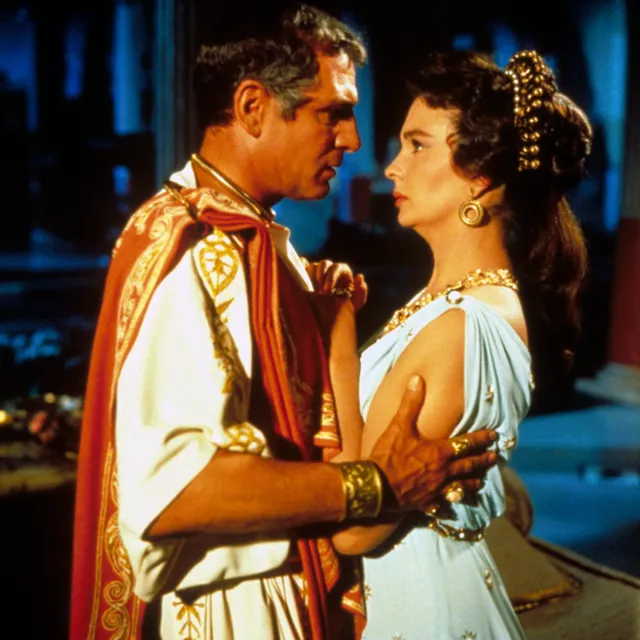
The trouble is, period epics have always had a more mixed approach to accents than people remember. More modern films like Gladiator may have had actors like Joaquin Phoenix throwing on less-than-convincing English accents to appease accepted style, but take a stroll back to the epics of old, like Ben-Hur and The Ten Commandments, and the notion that historical drama requires accents from across the pond begins to evaporate. Charlton Heston may have affected a Mid-Atlantic accent throughout his acting career, but his voice is still distinctly American, as are numerous other accents in those films. While 1953’s original CinemaScope epic The Robe might’ve had everyone putting on British accents, major films like Stanley Kubrick’s Spartacus defiantly featured American accents.
Indeed, for his turn making an ancient epic, Kubrick made differing accents part of the thematic texture, casting the Romans mostly with British actors, and their slaves with Americans, and having each use their natural speech. It’s a method George Lucas would later pick up in Star Wars—does “A long time ago in a galaxy far, far away” make it a period epic, too?—by casting mostly Brits as ranking Imperial officers, while his scrappy heroes were largely American.
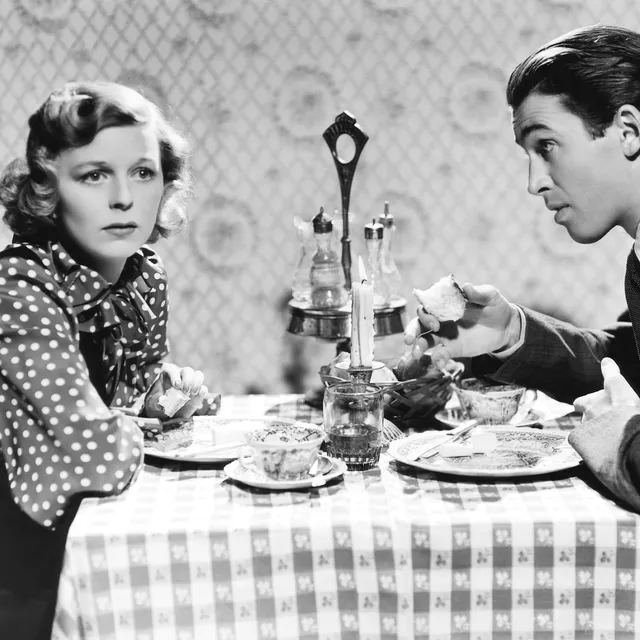
Kubrick himself had employed the practice previously, on 1957’s Paths of Glory, a military drama about the French in World War I. Despite all playing Frenchmen, the higher-up characters in the film—the officers and generals who give the orders—are mostly played by Brits, while star Kirk Douglas and his lowly soldiers are played by Americans, accents and all. In these films, accent becomes a signifier of class. For moviegoers at the time, none of this would have been unusual. Hollywood had always played fast and loose with accents, often not bothering with them at all. Plenty of comedies and dramas were set in foreign countries, with actors mostly using their natural accents. In Ernst Lubitsch’s 1940 classic The Shop Around the Corner, any given scene features five or six different accents, from Midwestern, to Mid-Atlantic, to Austrian, to whatever Jimmy Stewart’s accent was, and all of them playing Hungarians in a story set in Budapest. No audience at the time would have batted an eye.
Over time, as films have become more naturalistic, allowances for incorrect accents have been harder to come by. Still, it’s questionable whether adhering to appropriate accents, even when the movie is entirely in English, has ever really mattered. Surely there are people out there who complain about Sean Connery using his iconic Scottish brogue to play a Soviet submarine captain in The Hunt for Red October, but they’d be in the minority, and rightly so. It’s the performance that matters, not the accent. When Martin Scorsese set out to finally film his masterful adaptation of The Last Temptation of Christ, he also let his actors keep their accent. Willem Dafoe playing Jesus simply sounds like Willem Dafoe, and Harvey Keitel plays Judas in full New Yorker mode. If anything, because they haven’t bothered to attempt accents, the lack of artifice in their performances makes Scorsese’s humanistic vision of the Biblical story feel startlingly intimate.
This seems to have been the guiding principle for Ridley Scott lately. While earlier Scott epics like Gladiator or 2005’s Kingdom of Heaven went heavy on the English accents, recent films like The Last Duel and Gladiator 2 haven’t bothered as much. In both films, Scott allowed his actors the space to do whatever they wanted accent-wise. In Gladiator 2, the Irish actor Paul Mescal goes a bit British, while Denzel Washington mostly sounds like Denzel Washington with a bit of Shakespearean flair in his delivery. For The Last Duel, Scott’s France-set medieval drama and another Damon picture, the accents were even more all over the place, prompting questions. “In The Last Duel, there’s no French accent. That would’ve been a disaster, and yet, it’s all French. Who cares? Like, shut the fuck up, then you’ll enjoy the movie,” Scott told Deadline in 2021.
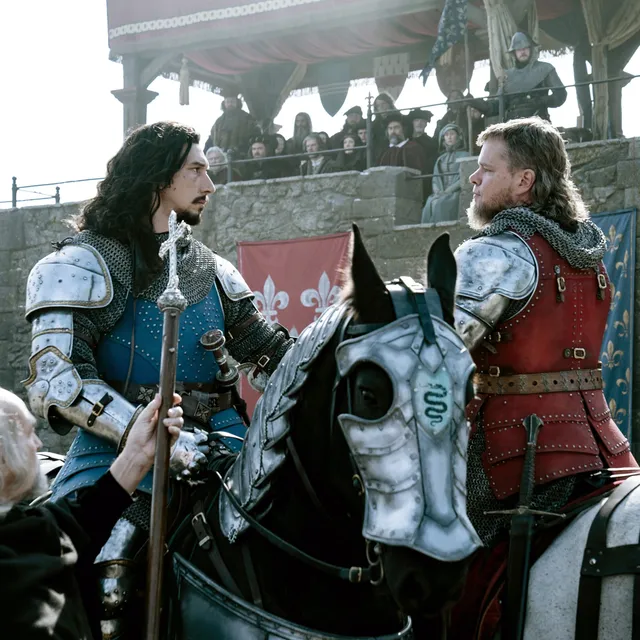
Matt Damon and Adam Driver in 2021’s ‘The Last Duel’20th Century Studios | Everett Collection
Nolan, as yet, hasn’t addressed the accents in The Odyssey, and it’s doubtful he’ll tell anyone to “shut the fuck up” about it, but his approach in the film is still a departure from previous norms. Instead of sticking to the tried and true English accent, or creating a thematic scheme for accent work as Kubrick did, or even throwing caution to the wind like Scott, Nolan has chosen to go all-American. Without seeing the film in full, it’s impossible to judge the creative choice, but even from the trailer it’s not hard to surmise the intention.
For all the incredible scale Nolan has conjured in his $250 million epic, he’s always been a director interested in more intimate, grounded drama. British accents in these kinds of movies are usually meant to elevate the storytelling, to make epic stories that feel closer to the gods. Not unlike George Lucas’s scrappy heroes, it seems Nolan is after a more relatable humanity in his mythic tale. And in Hollywood, there’s nothing more relatable than an American accent. Like apple pie.