This Italian Sneaker Brand’s Been Waiting 80 Years for its Moment
And with a JW Anderson collab on the way, you definitely don’t want to sleep on it this time
Diadora has been doing its thing for a while. Long before Nike and Adidas, it was there, quietly working away in the background. Founded in 1948 in Caerano di San Marco – a tiny town in northern Italy – the label started life making hiking boots before switching things up into tennis, football, and cycling. It’s never really chased hype in the same way as its bigger rivals, but even without it, the brand’s about to make its biggest comeback yet.
Part of that comes down to timing. In case you haven’t already noticed, fashion’s moved away from chunky runners and back towards slimmer, lower profile models. Football trainers are everywhere. Terrace culture’s back. Vintage Italian sportswear is having another moment. Basically, the entire industry has looped back around to the exact lane that Diadora’s been sitting in for decades.
And unlike a lot of brands currently digging through their archives trying to “rediscover” authenticity, Diadora never really left its own.
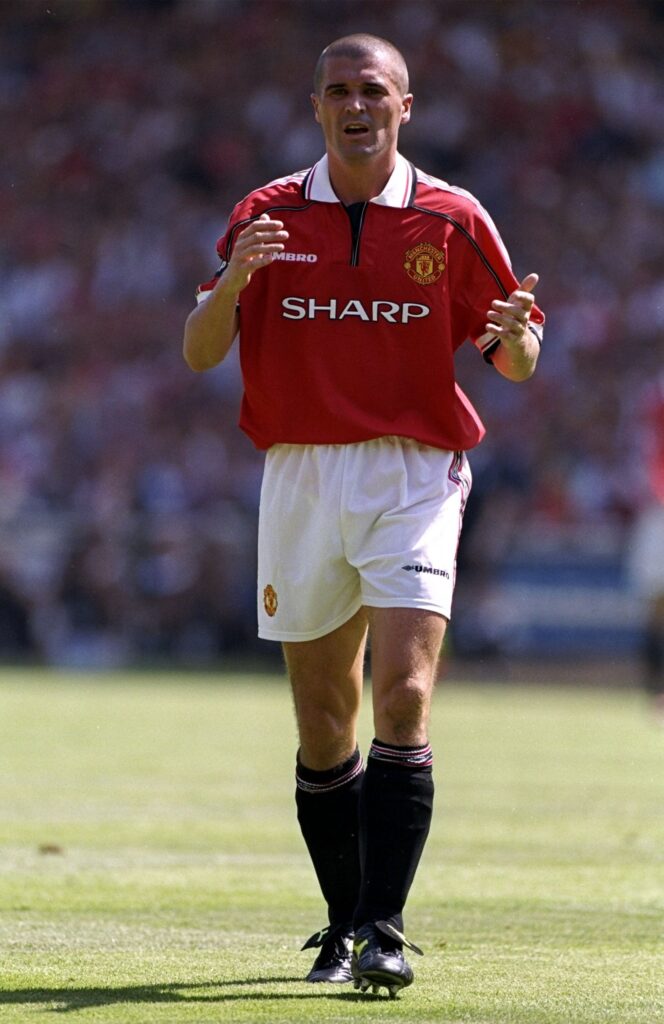
Back in the ’80s and ’90s, the brand was absolutely massive. Björn Borg – the Swedish tennis icon with 11 Grand Slam titles and one of the most influential off-court styles of his era – was a Diadora guy. So was Boris Becker, the German prodigy who became Wimbledon’s youngest-ever men’s singles champion at just 17. On the football pitch, it laced up legends like Paolo Maldini and Roy Keane. It sponsored clubs across Serie A and beyond. Silhouettes like the B.Elite became a genuine tennis classic. And the Equipe quietly evolved into one of the best retro runners (that sneakerheads still don’t talk about enough).
Now, 20-something years later, Diadora’s pushing into fashion more seriously than ever. At the end of 2024, the Italian label took the wraps off Diadora Legacy, a new spin-off focused on moving it further beyond performance sportswear. And at its helm, it installed Nikolaj Hansson as creative director – the man behind Palmes, the Copenhagen-based imprint that basically helped make tennis feel cool again.
For Hansson, though, the connection wasn’t random. “I’ve just always had this deep connection with the label when I was growing up,” he told British GQ in an interview. “They’ve worked with Björn Borg and Boris Becker. But it’s not just tennis either. They’ve even worked in fencing and beach volleyball and cycling and everything.” What appealed to him most wasn’t necessarily the archive itself, but how, well, human the entire operation still felt.
“Unlike a lot of sportswear companies where different departments can be on opposite sides of the world, everything was all in one place at Diadora,” he said. “They have a production site in the headquarters. Like, you walk to the right, and there’s marketing and sales. You go left, and there’s 10 guys doing 100 shoes a day.”
And weirdly, that imperfect setup is part of the appeal. “They can’t do any more because they can’t find anyone who knows how to work the machines because they’re from 1982, and Italy doesn’t educate for that type of manufacturing anymore.”
Sure, that sorta thing would probably sound like a logistical nightmare in a Q2 boardroom deck. But in 2026, when every other sneaker brand is going on and on about “craft” and “heritage” through carefully filtered campaigns, Diadora’s version feels unusually real.
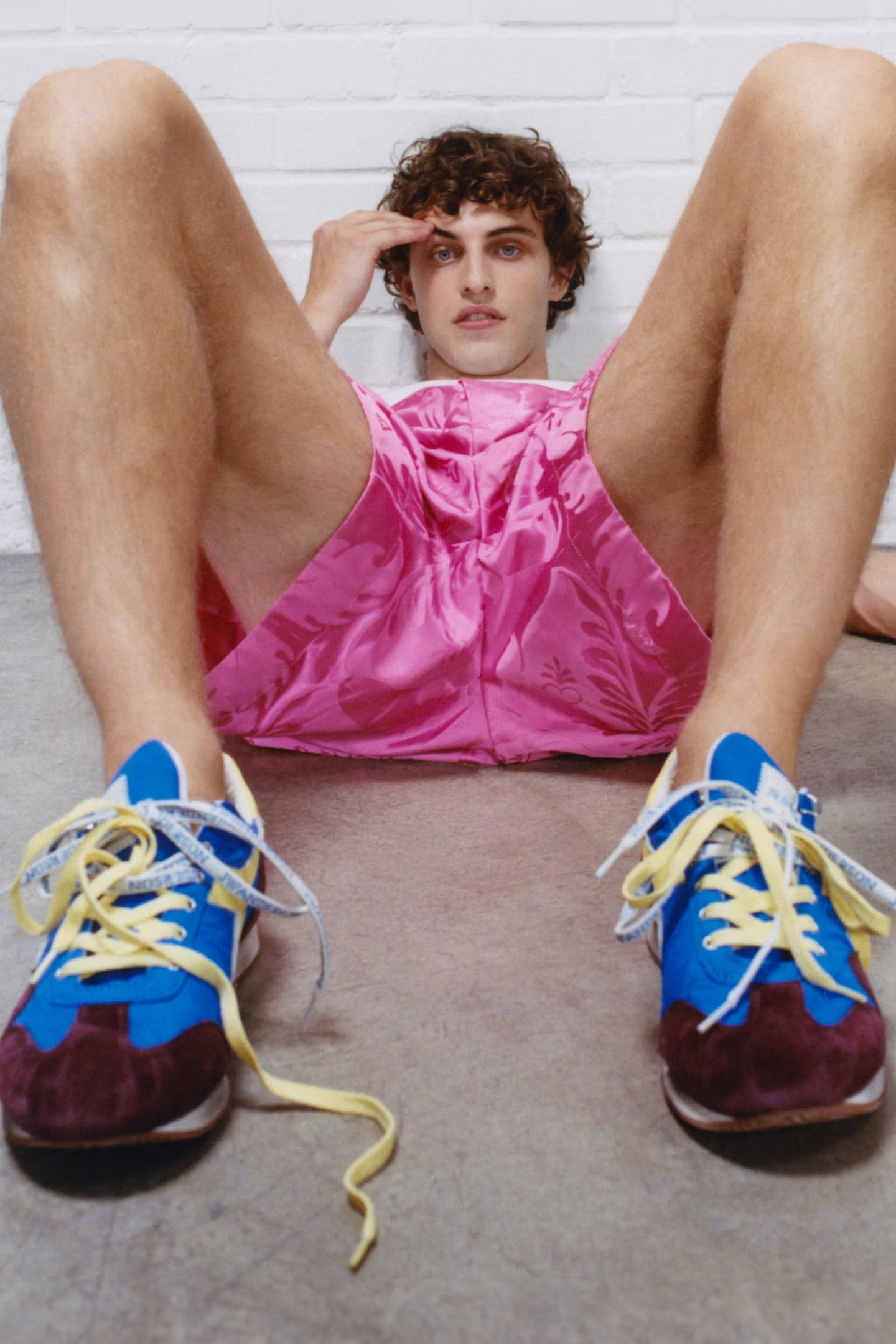
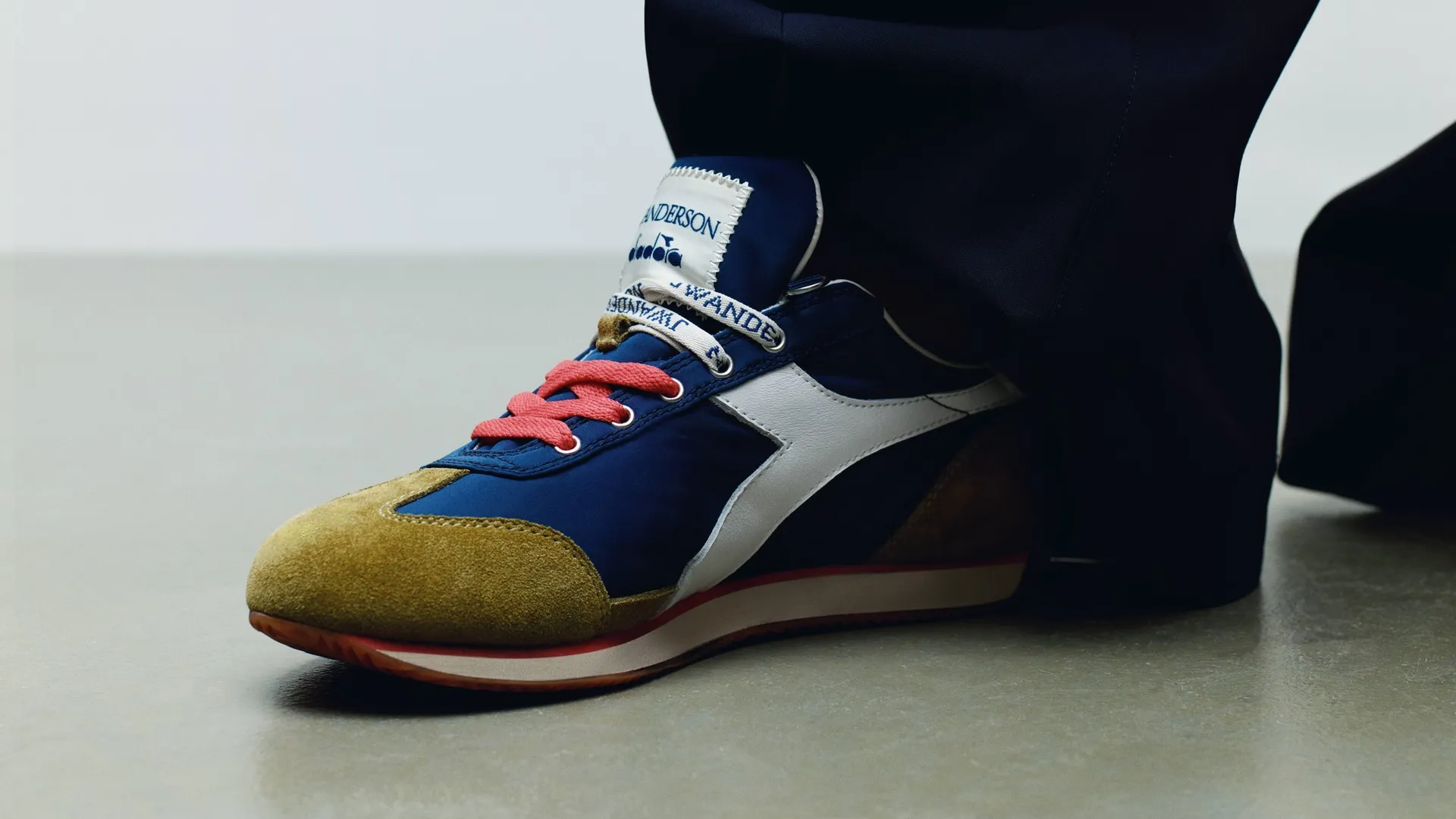
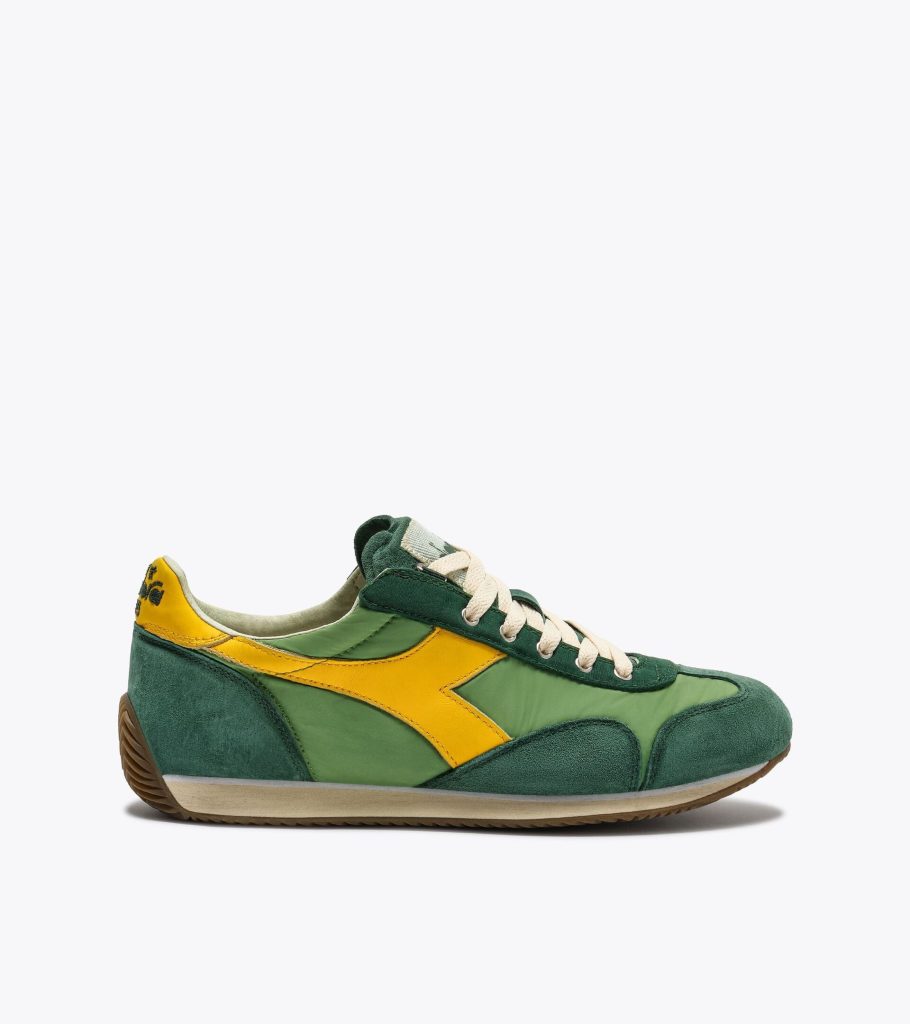
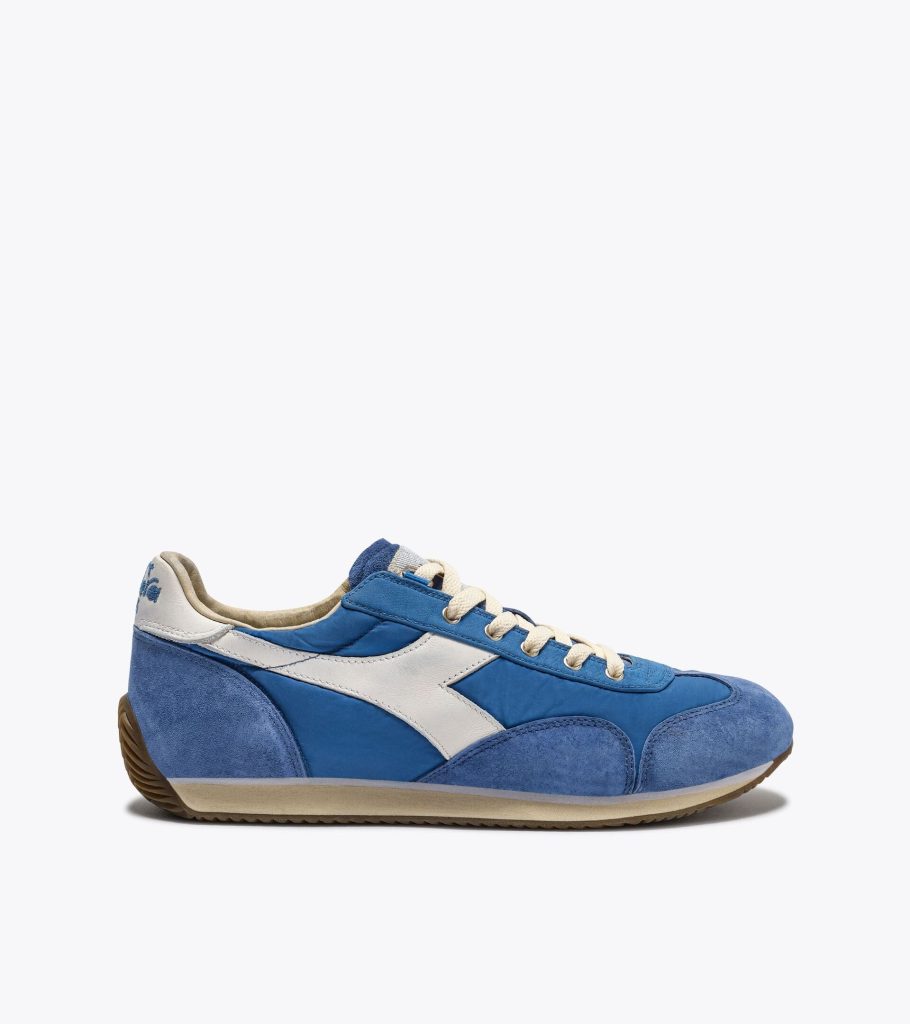
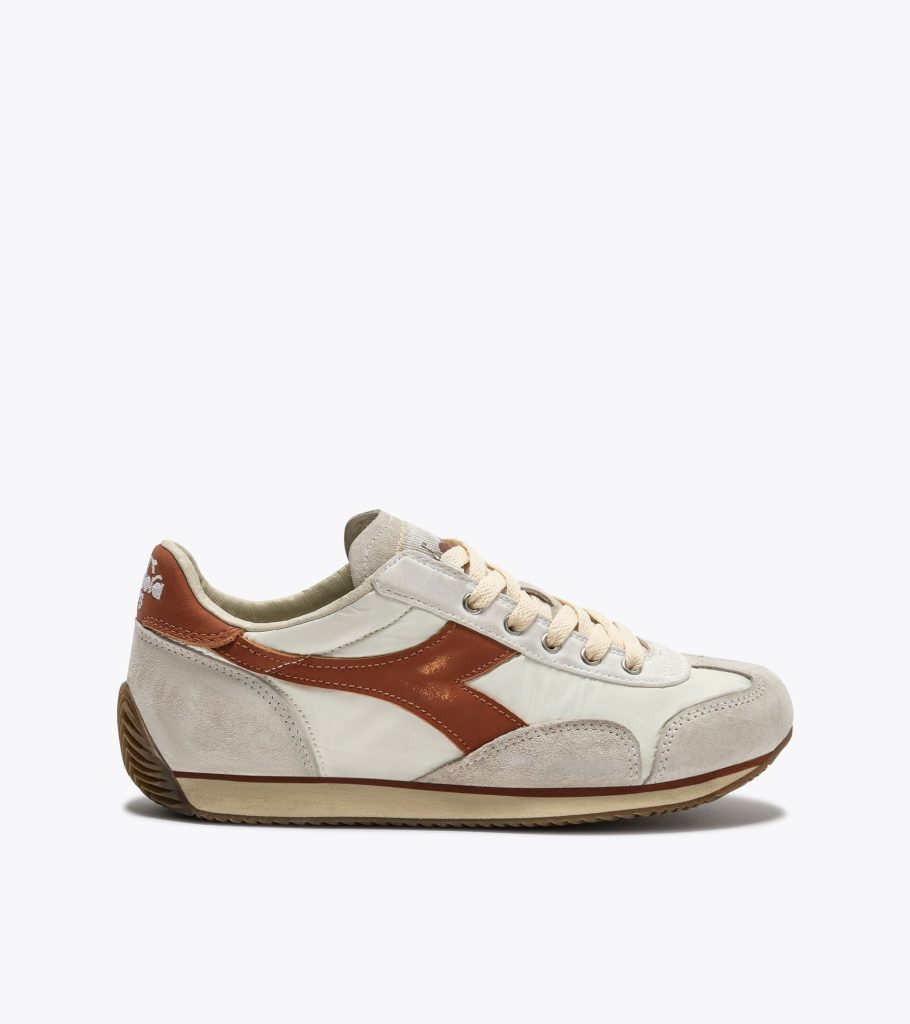
Earlier this season, the brand also brought back the Equipe properly – a super lightweight runner that first launched in the ’70s and now feels perfectly aligned with fashion’s obsession with flatter, vintage-looking sneakers. Instead of over-designing it or trying to modernise it beyond recognition, Diadora mostly left it alone. Thin sole. Nylon uppers. Clean shape. Everything you need, nothing that you don’t. Sizes are already selling out. And while it could’ve just been left there, a JW Anderson x Diadora Equipe is also in the works.
Considering Northern Irish designer’s obsession with football trainers and slightly strange silhouettes (like the Dior Roadster that Robert Pattinson was recently spotted wearing) the collab feels unexpected, but it also makes total sense.
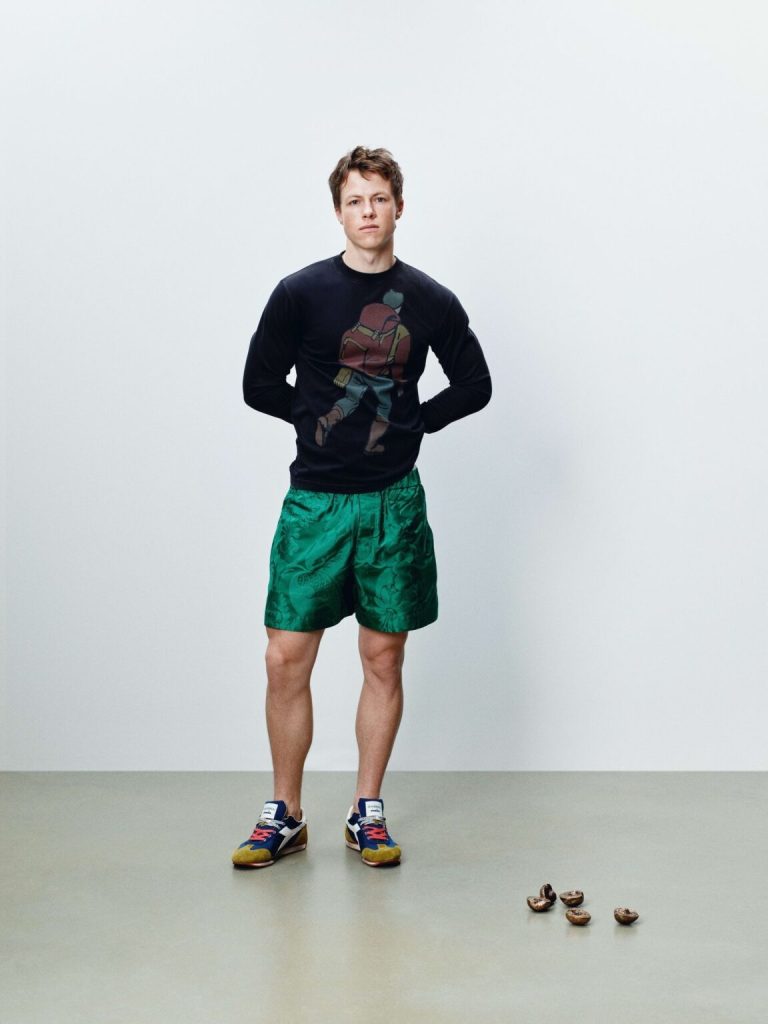
What makes Diadora so interesting right now is that it still feels oddly untouched. In a time where every drop out there comes with teasers, countdown clocks, and resale speculation before the shoe’s even out, Diadora operates at a difference pace. Models like the Equipe don’t feel like they were designed in a marketing meeting to become “the next Samba.” It just feels like a genuinely good old school runner that’s happened to become relevant again at the perfect time. In a way, it sits somewhere between the worlds of Mizuno and Saucony and maybe even Umbro – brands sneaker people tend to check out once they get a bit bored of the usual stuff.
Diadora didn’t really need a dramatic reinvention. It already has the archive. It already has the history. It already has the manufacturing story that most companies would kill for. For years, it’s just existed slightly outside the convo while everyone else fought over New Balances and limited edition Jordans. But now? The industry’s slowly catching up to what Diadora’s been doing all along.
And with a collaborator like Jonathan Anderson attached, it might finally get the attention it deserves.